
Your Building's Digital Infrastructure Built Right
Data and network cabling plus structured cabling services for commercial and industrial properties.
Your commercial or industrial facility depends on a stable, organized network infrastructure to handle everything from daily communications to equipment monitoring systems. When cables are poorly installed or incorrectly terminated, you see dropped connections, slow data transfers, and equipment that stops communicating at critical moments. DR Low Voltage installs and organizes the data cabling and structured cabling systems that keep your operations running without interruptions caused by wiring failures.
This service includes running Category 5e, Category 6, and Category 6a cables through walls, ceilings, and cable trays, terminating each connection at patch panels or wall jacks, and labeling every cable so your team knows exactly what connects where. You also receive a structured cabling system that consolidates voice, data, and video lines into one organized pathway, making future additions or troubleshooting faster and more straightforward. All installations follow TIA/EIA standards to ensure your network performs reliably under the demands of commercial or industrial use.
If your building needs new network cabling or a structured cabling upgrade, reach out to discuss what your facility requires and how the installation process will work around your schedule.
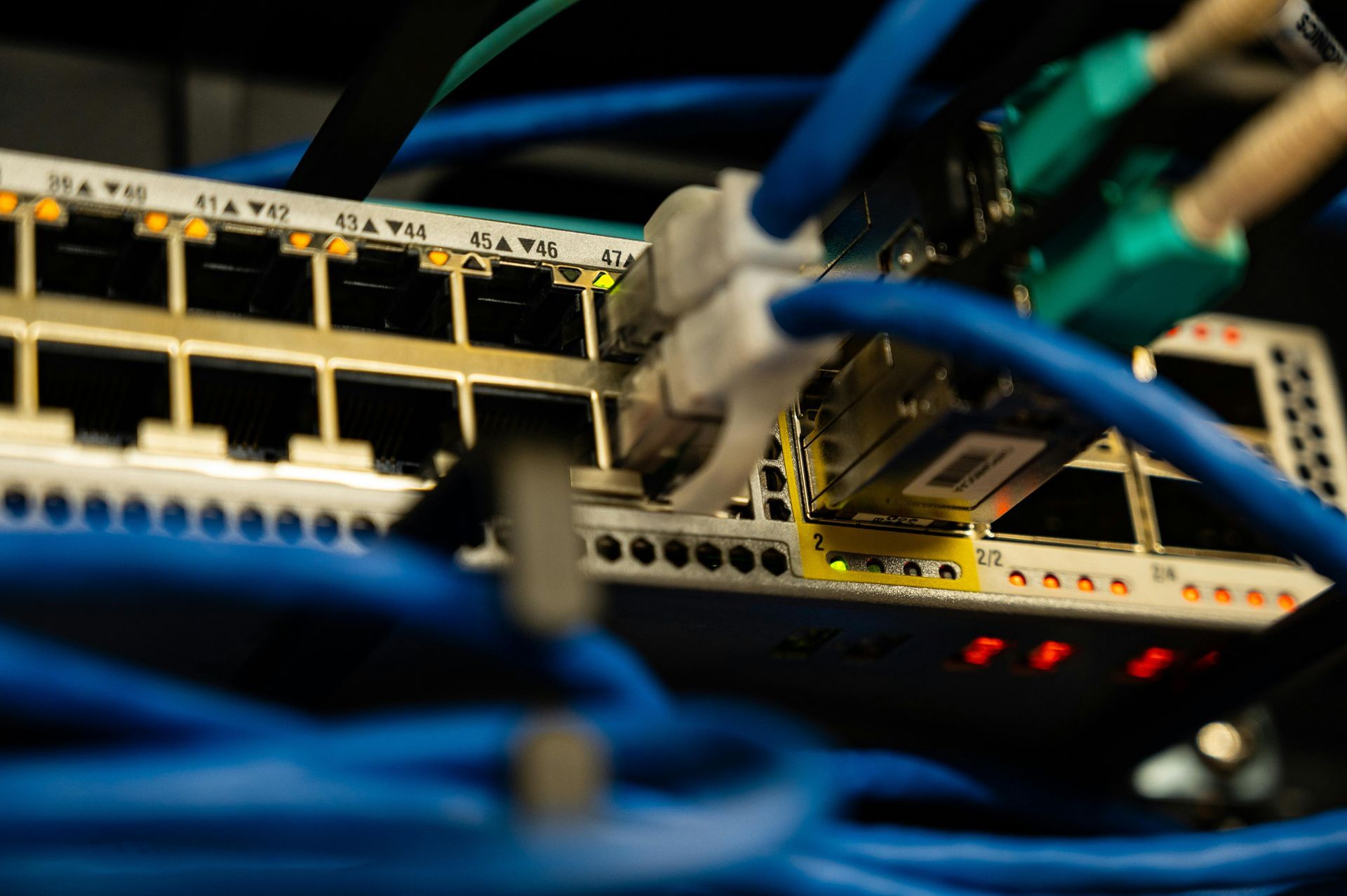
How cables are run and terminated in your space
The installation begins with a site walkthrough to identify the best routes for cable runs, avoiding interference from electrical lines and ensuring pathways remain accessible for future maintenance. DR Low Voltage uses cable pullers, fish tape, and J-hooks to route cables through drop ceilings, conduit, or open truss systems, keeping runs neat and minimizing slack that can cause tangling or signal degradation. Each cable is tested with a network tester after termination to confirm continuity and proper pin configuration.
After the work is finished, you will see labeled cables at every termination point, a patch panel organized by zone or department, and network ports that deliver consistent speeds without packet loss. Your IT team will have documentation showing which cable serves which location, making moves, adds, and changes straightforward without guessing or tracing lines through walls. Structured cabling consolidates what used to be separate systems into one backbone, so adding a new security camera or VoIP phone does not require installing entirely new wiring.
The service includes securing cables with cable management hardware, grounding connections where required, and verifying that all runs meet length limitations for your chosen cable category. It does not include configuring network switches, installing routers, or managing IP addresses, which remain the responsibility of your IT staff or network administrator. The final installation transitions cleanly into the testing phase, where each connection is verified before your systems go live.
Questions that come up before scheduling installation
These are the questions property managers, facility directors, and business owners ask when planning a cabling project for a commercial or industrial building.
What is the difference between data cabling and structured cabling?
Data cabling refers to the physical cables that connect computers, phones, and devices to your network. Structured cabling is the organized system that consolidates all those connections into a single, standardized framework using patch panels, cable trays, and labeled runs.
How long does a commercial cabling installation take?
Installation time depends on the number of cable runs, the layout of your building, and whether walls or ceilings need to be opened. A small office with twenty drops might take one to two days, while a large industrial facility with hundreds of terminations can take several weeks.
What cable category should I use for my building?
Category 6 or 6a is recommended for most commercial and industrial installations because it supports higher data speeds and reduces crosstalk over long runs. Category 5e is still acceptable for basic voice and data applications where bandwidth demands remain low.
Why do cables need to be labeled and documented?
Labeling each cable and documenting its endpoint prevents your team from wasting time tracing lines when troubleshooting or adding new devices. You will know immediately which cable connects to which room, rack, or equipment without opening walls or pulling random cables.
What happens if a cable fails after installation?
If a cable fails due to incorrect termination or a manufacturing defect, DR Low Voltage will return to re-terminate or replace the affected run. Damage caused by construction work, equipment impacts, or unauthorized modifications falls outside standard service coverage.
DR Low Voltage handles everything from initial cable pulls through final testing and documentation, so your network infrastructure is ready to support the devices and systems your operation depends on. Contact DR Low Voltage to review your building's layout, discuss cable types, and schedule the installation around your operational hours.